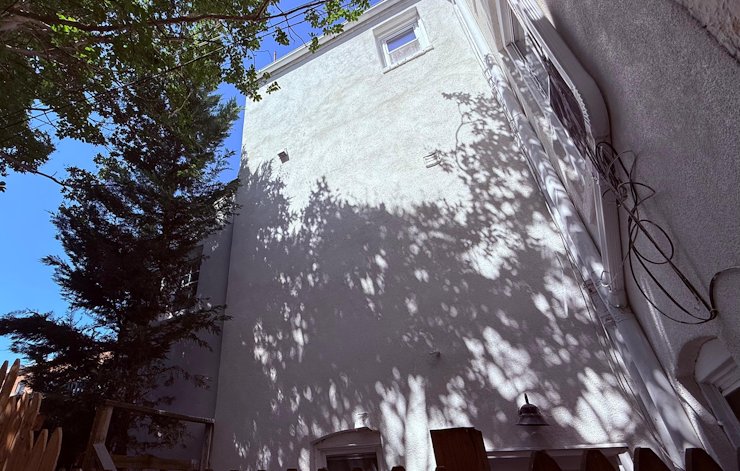
Stucco and plaster jobs in progress #190
Updated June, 2026 !
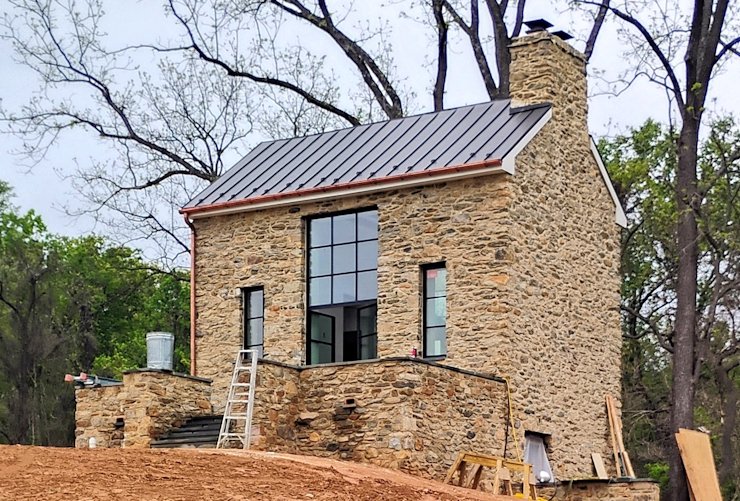
New plaster in this old stone cottage
Middleburg, Virginia
Video of the finished top floor:
This stone cottage was built about 1800. Plaster sure looks better than cheap durn drywall.
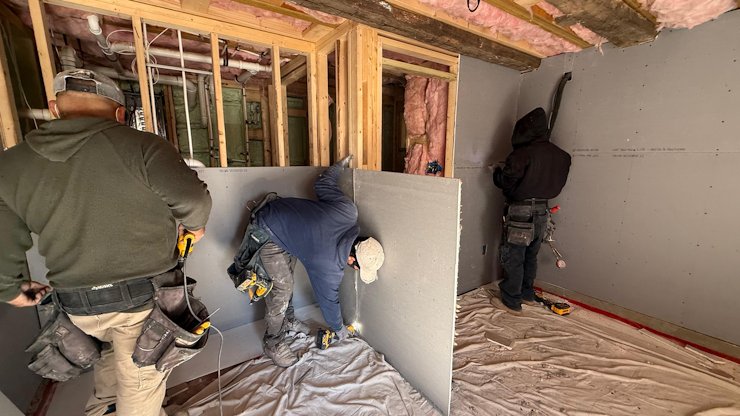
Blue board is a veneer plaster base. It is like regular gypsum board, but the face paper is more porous.
⇉ FOLLOW THIS LINK TO SEE MORE ! ⇇
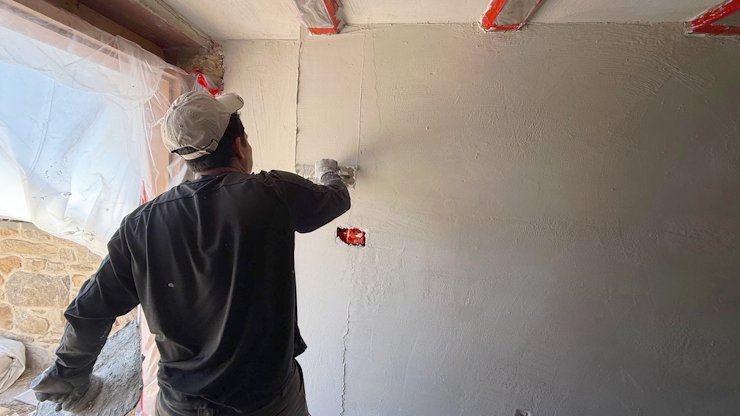
Veneer basecoat plaster is super hard.
⇉ I MADE A PAGE FOR THIS PROJECT HERE ! ⇇
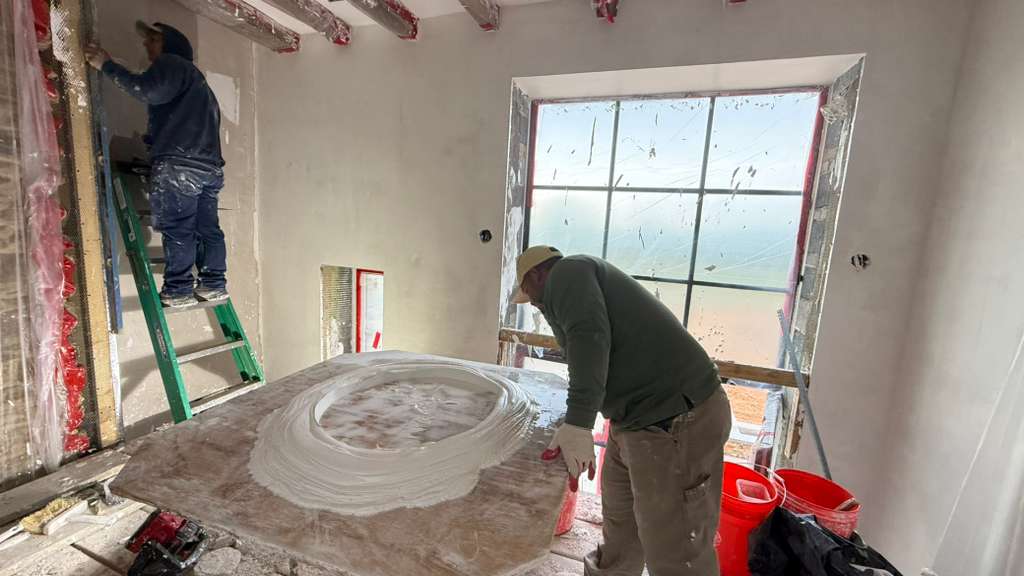
Our finish coat is lime and molding plaster in Virginia.
⇉ FOLLOW THIS LINK FOR MORE DETAILS ! ⇇
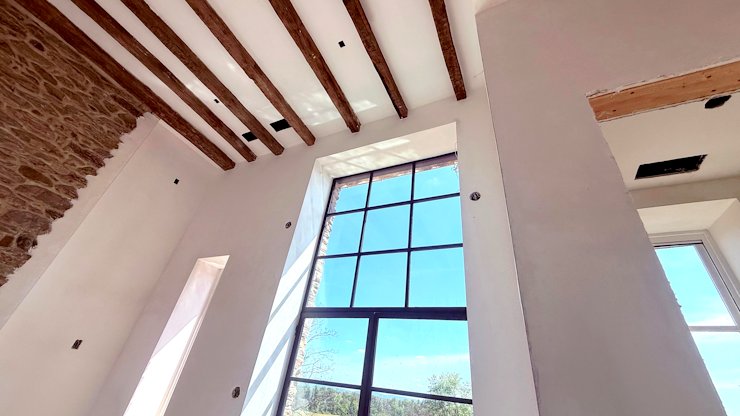
Plaster walls and ceilings. Feel the smooth quality.
⇉ I MADE A PAGE FOR THIS PROJECT HERE ! ⇇
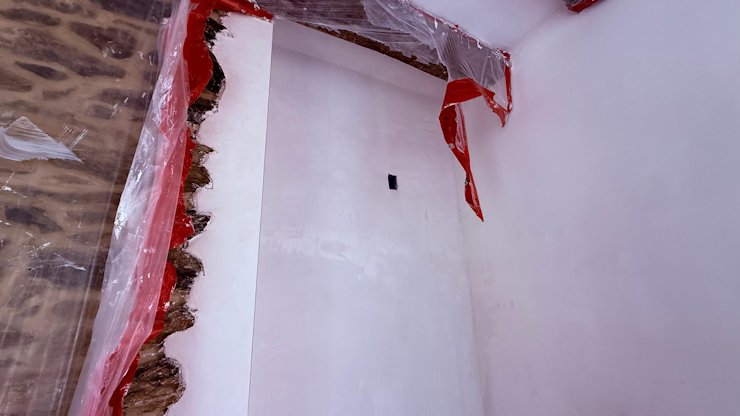
We plastered around every stone. Try doing this with drywall.
⇉ FOLLOW THIS LINK FOR MORE DETAILS ! ⇇
Leaky chimney re stucco
Arlington, Virginia
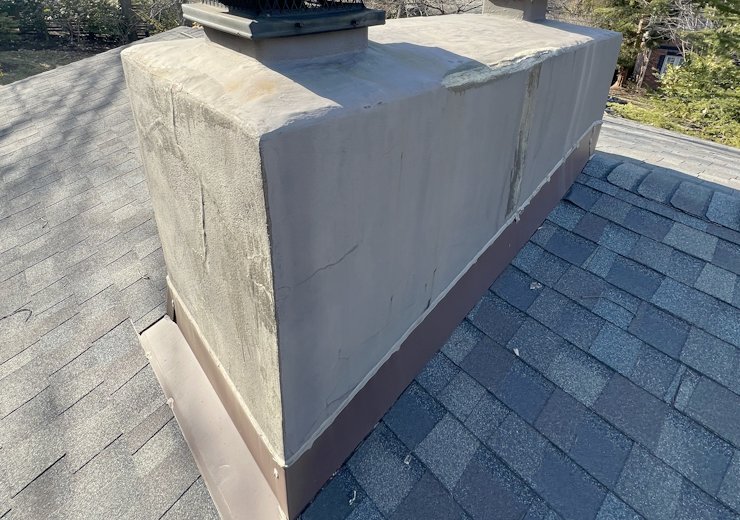
The competition sure does awful work. Note the flashing goes over the stucco and not under the stucco.
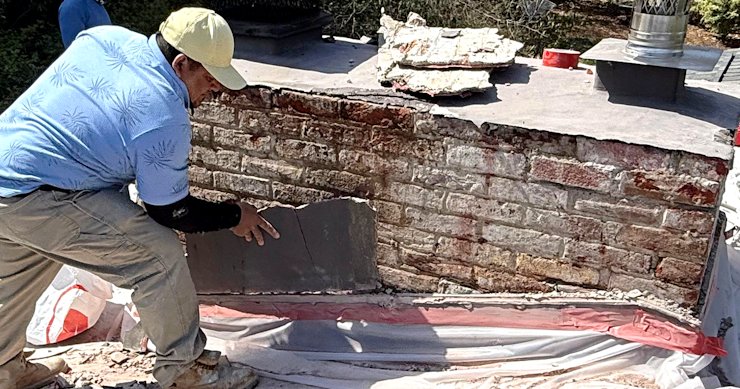
Mortar is pulled off with our bare hands. Guess they didn't read my chapter on bonding stucco.
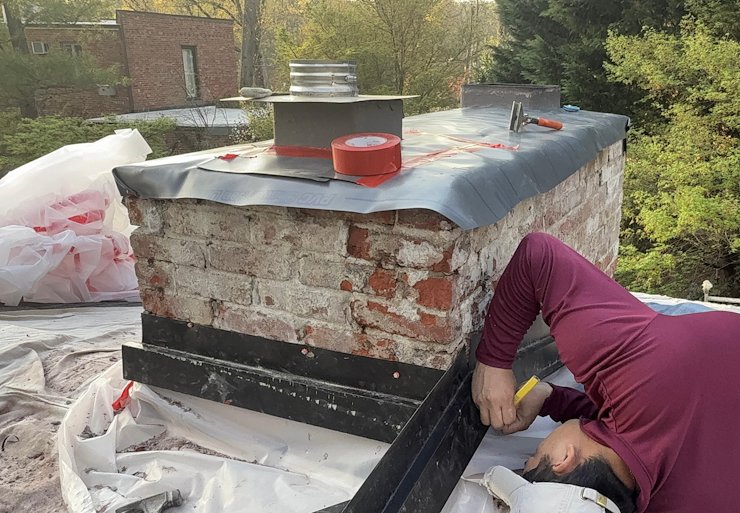
The cap was covered with our signature rubber membrane. The flashing was covered with Z flashing.
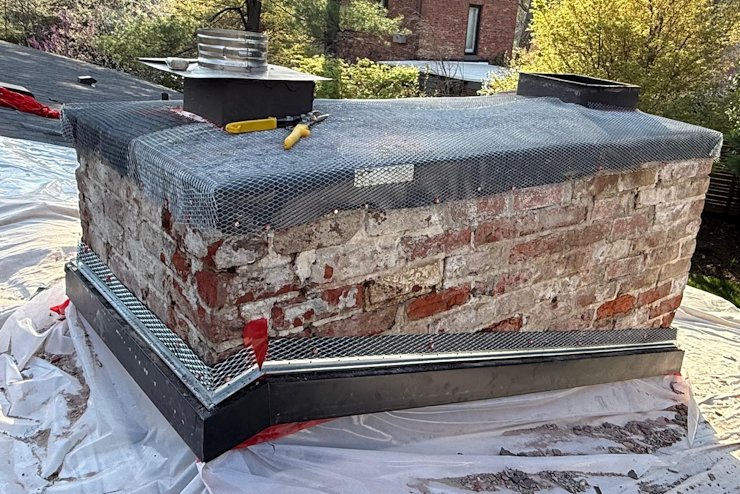
Rubber membrane is covered with metal lath without nailing through the top. The top flange on the flashing is overlapped with our weep stop, or plaster stop with holes drilled in the bottom. A gap is left for good drainage.
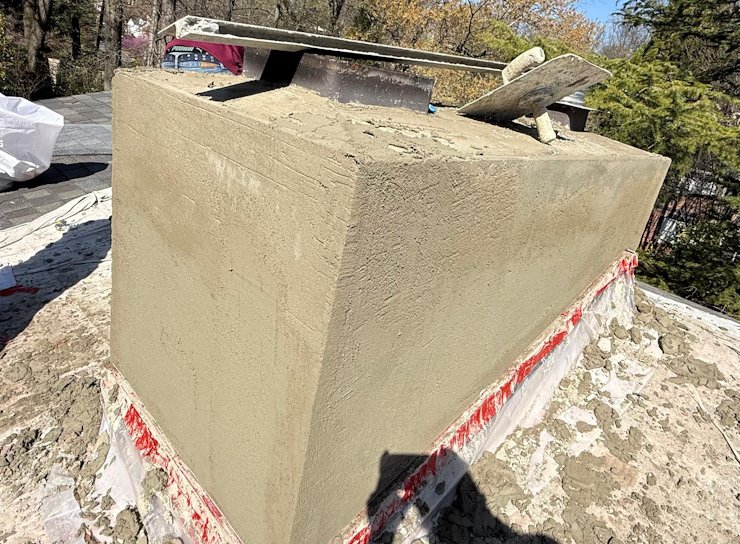
Mortar was bonded to the brick using a bonding admixture. This mortar is straight, sonny boy.
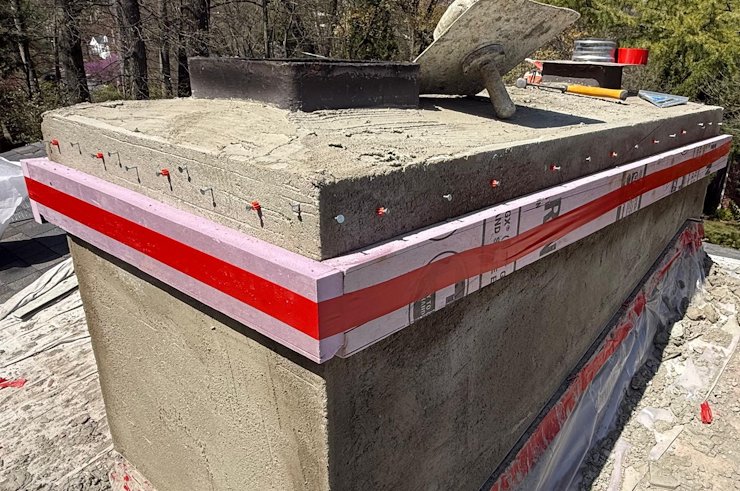
The band is formed with styrofoam. The foam is temporary, don't worry. Nails are driven with the heads sticking out. These nails support the mortar on the band.
⇉ MORE DETAILS ON THIS PROJECT HERE ! ⇇
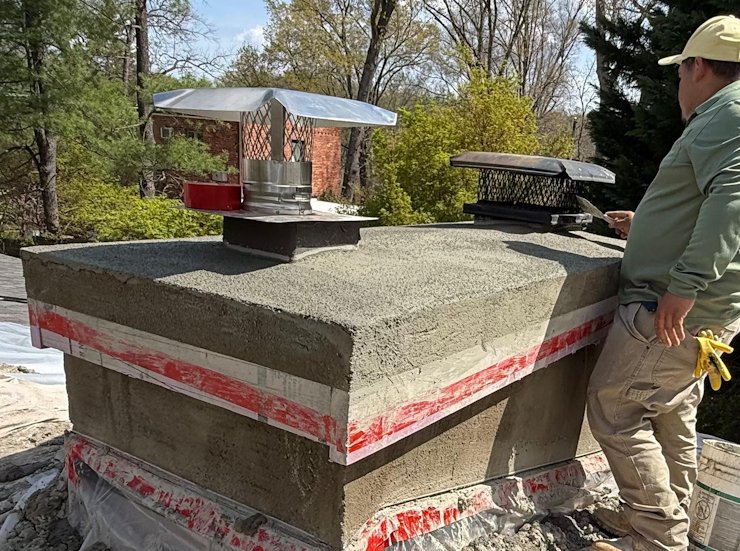
The band is filled in and the top is rounded off for drainage. The drip band at the top extends the life of the chimney.
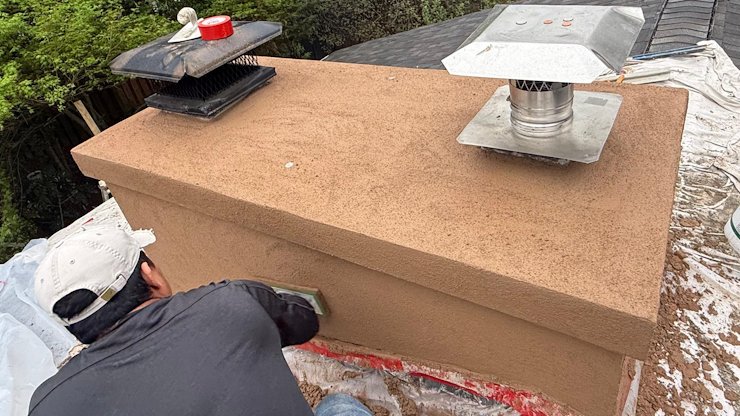
Finish coat is REAL cement and REAL sand. Color is added using paint tint.
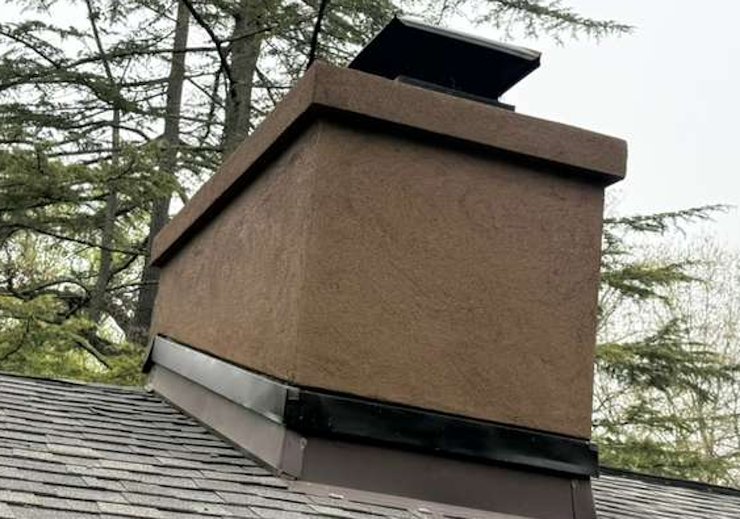
A view of the finished chimney showing the gap between the weep and the flashing. This chimney will never leak. I'll bet my company name on it.
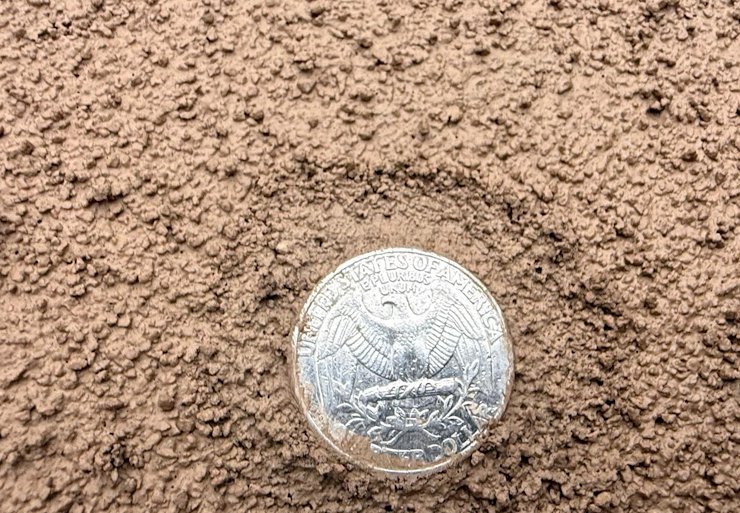
We embed coins in the tops of our chimneys.
Historic stucco soffits replaced
Chevy Chase, Washington, DC
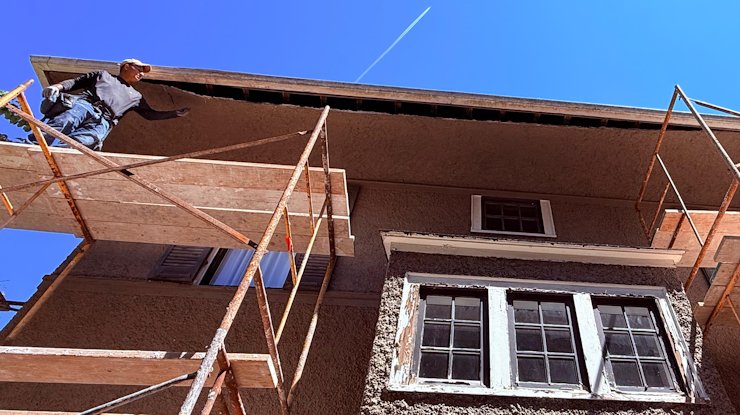
Stucco soffit was sagging and getting ready to fall off. We replaced the other side back in 2010.
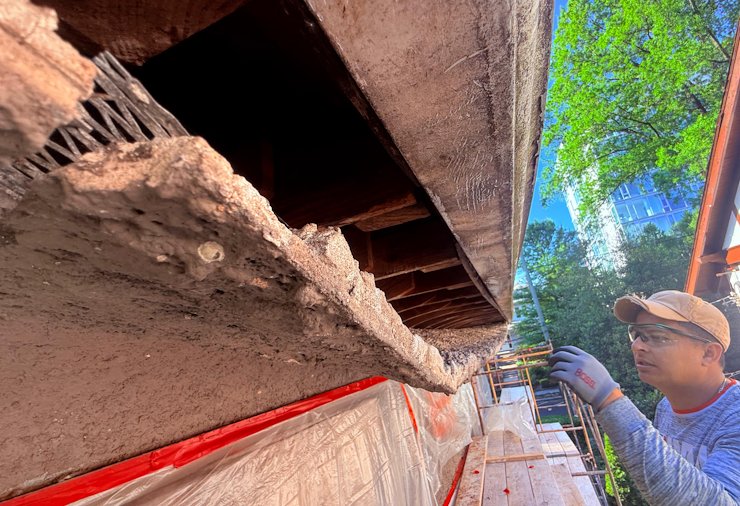
Some ingrate back in 1921 used teeny 3/8" fence staples to put the lath on. If they used one inch staples it would still be in good shape.
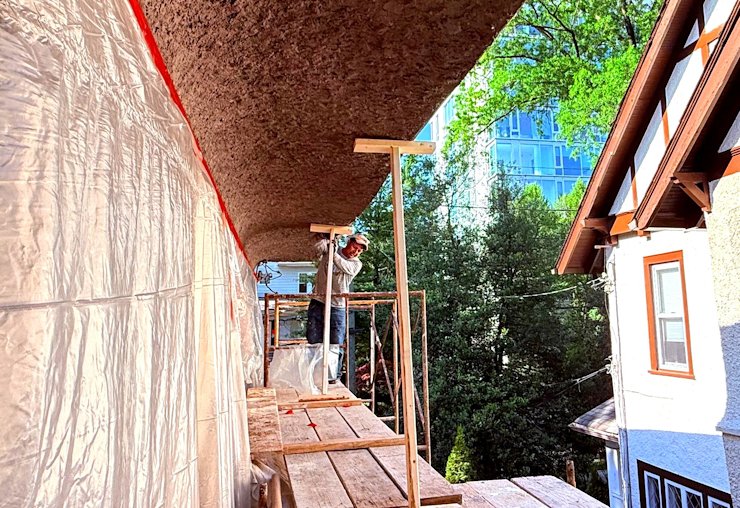
Ceiling was propped up with temporary supports to avoid getting killed. This ceiling weighs almost 4,000 lbs.
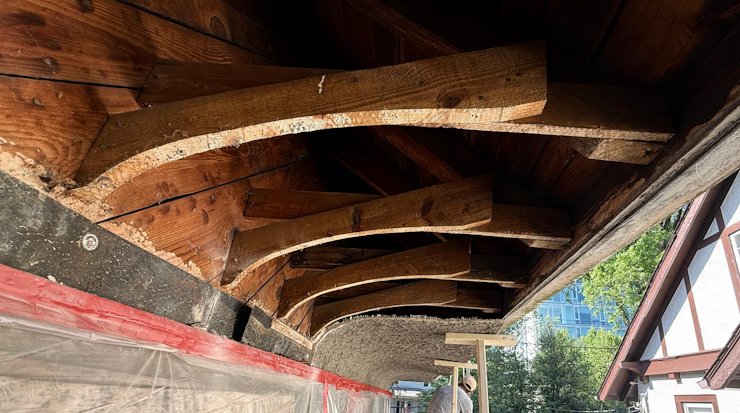
If you appreciate carpentry check out the framing on the cove. This probably was done without power tools.
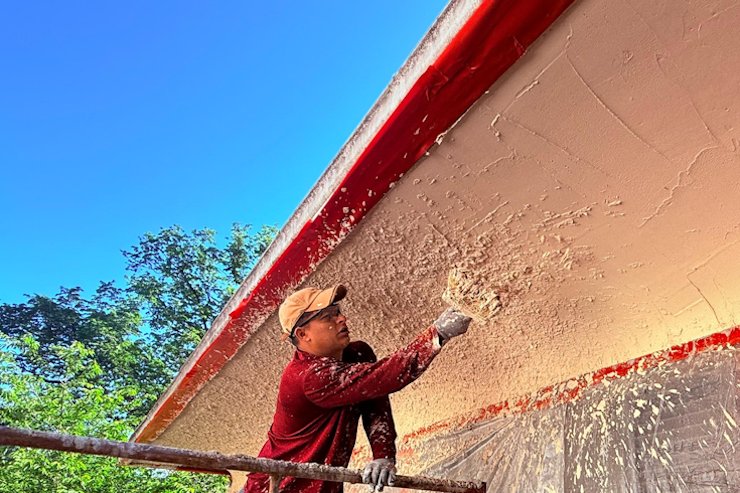
Heavy dash on finish matches on the money.
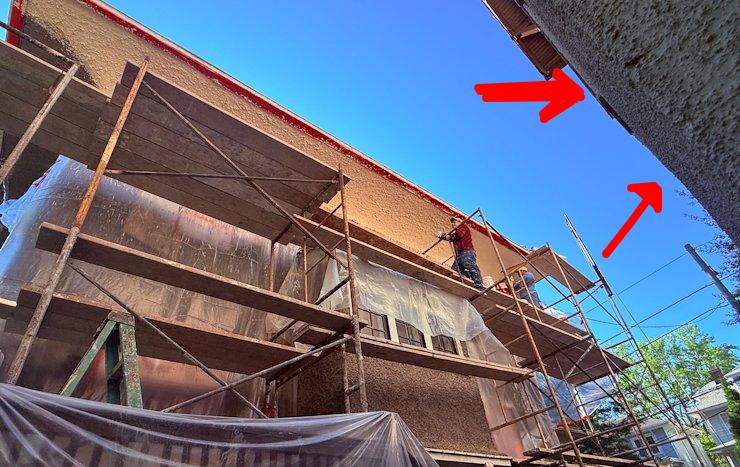
The red arrows point to the addition we did next door in 2008. Here's a link to see more.
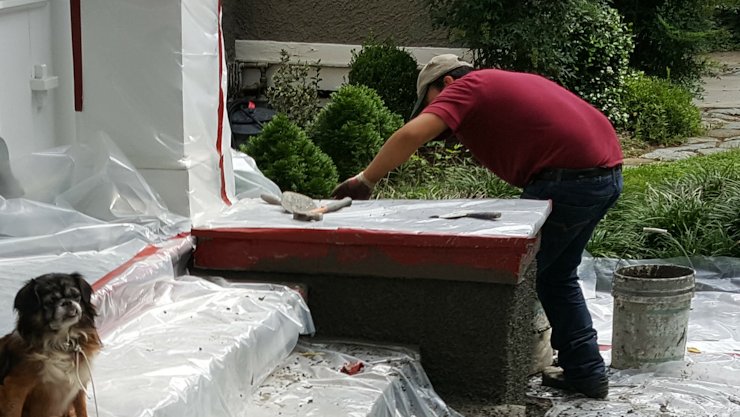
We stuccoed the knee walls on the house next door in 2016 while my late dog, Bijou, looks on.
Historic stucco recoated
Capitol Hill, Washington, DC
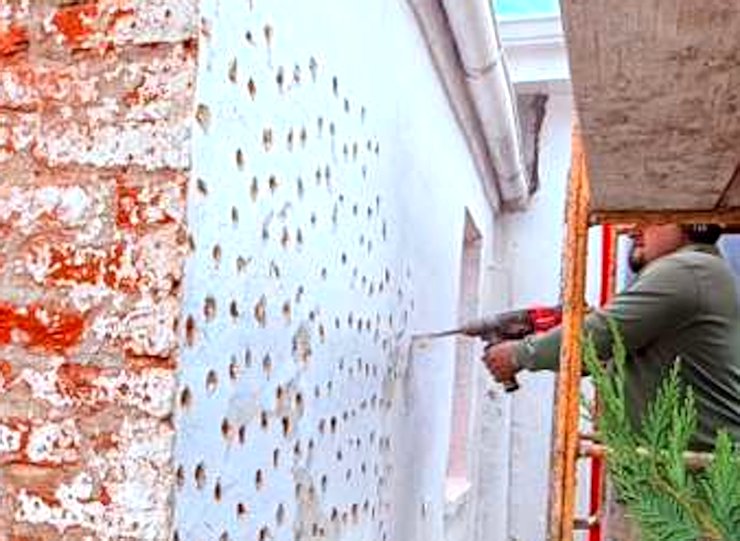
You may have seen my chipping and bonding method before. Walls are chipped about every four inches or so. Mortar is put on with an acrylic bonding admixture. We have never had failure using this method
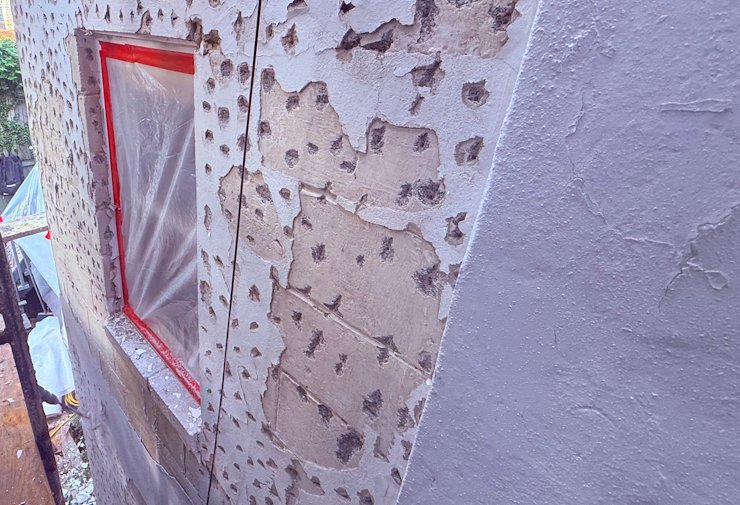
An old addition had pre 1940 cinder blocks. Paper thin stucco was put over painted block. They didn't know about chipping and bonding.
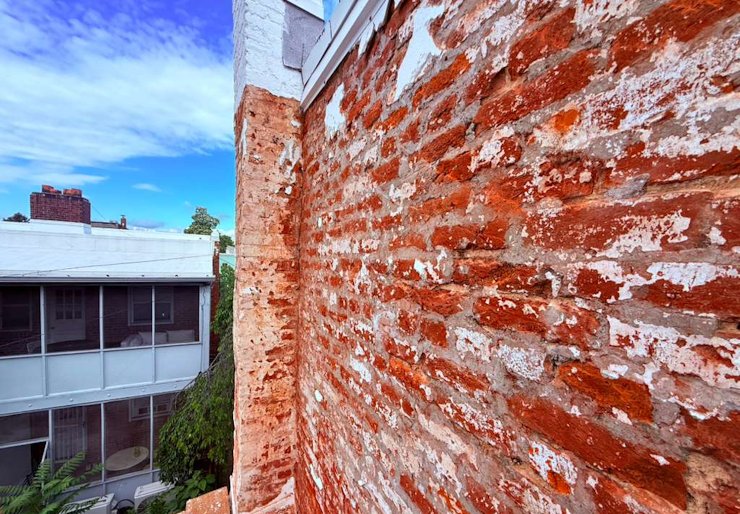
The same uninformed competition stuccoed over painted brick.
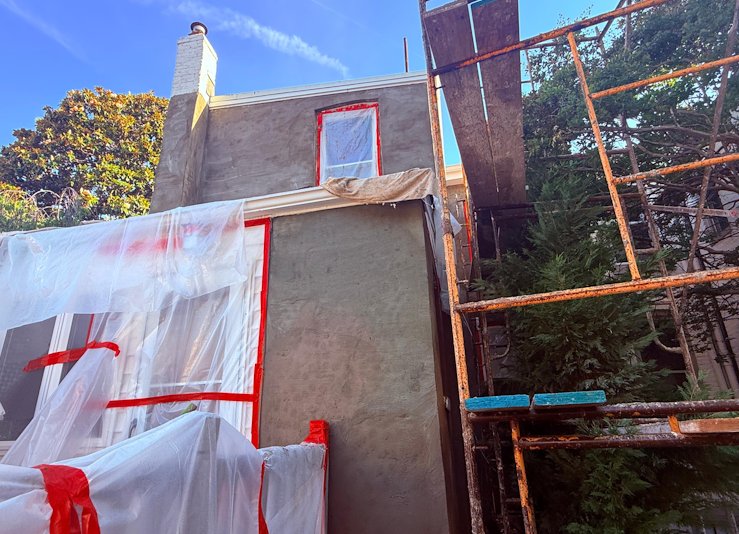
A basecoat was put on using flex-con, an acrylic bonding admixture. This makes mortar an adhesive.
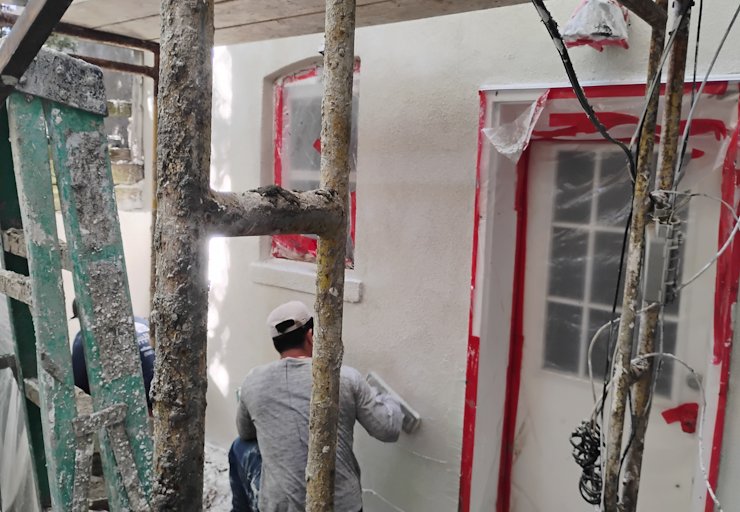
We added Sherwin Williams "pure white" tint, which is really a little yellow. This toned down the white portland and white sand so it isn't too stark. The color is more of a bone white.