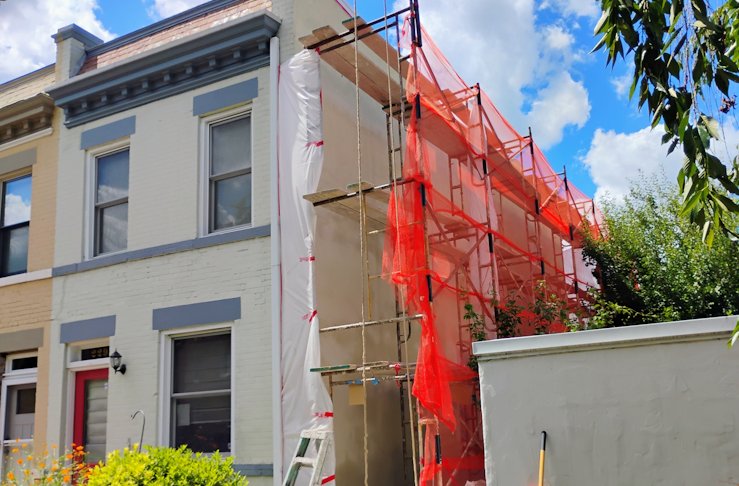
Re stucco on this 1910 house in Capitol Hill
Washington, DC
Here's how we did it:
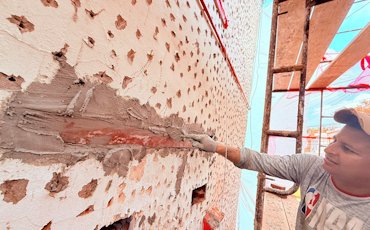
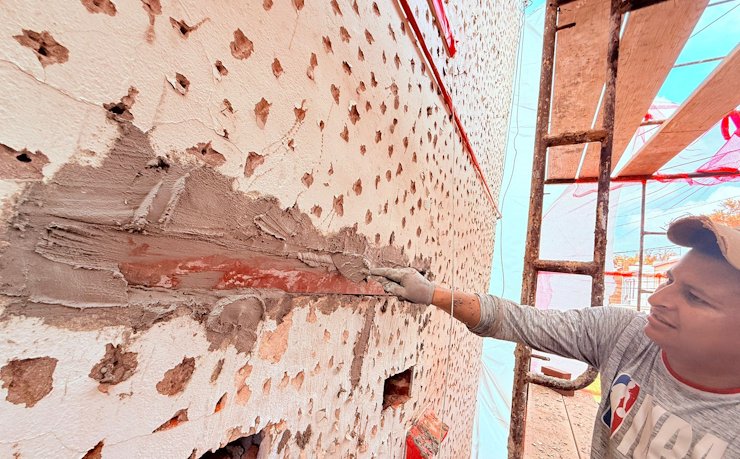
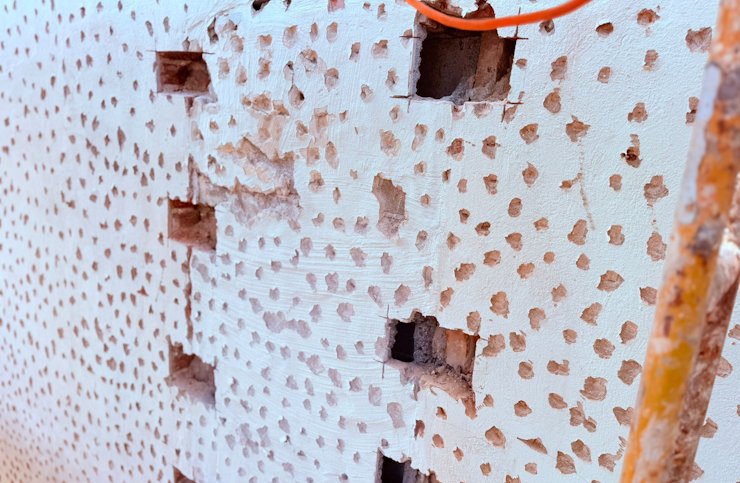
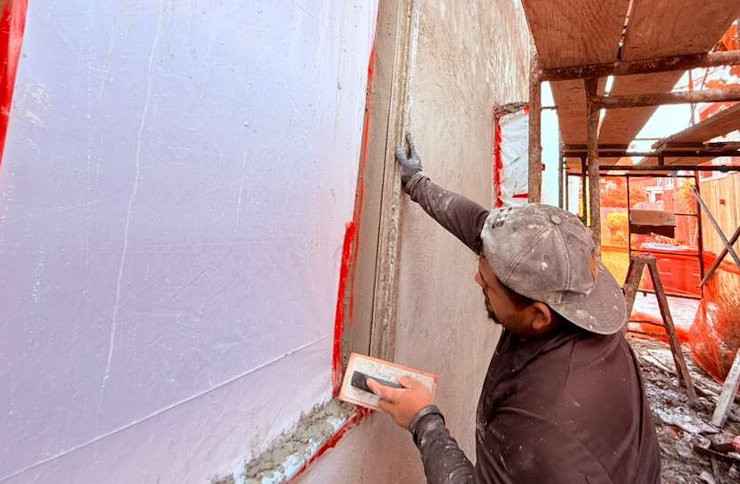
Wall was chipped for our chipping and bonding method of stucco over a painted surface. Window opening had been filled in with bricks with no steel lintel. Here we put in a steel lintel
to support the house. More on how we do this here in the Stucco News.
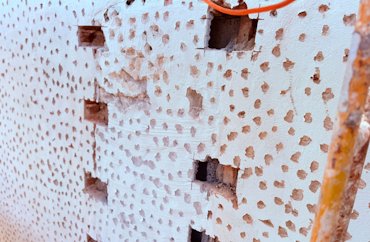
The bricks on the window infills weren't toothed in. Without toothing in the edges will crack.
At least they used bricks. Window patches like this that are filled with wood framing will fail
on the edges every time.
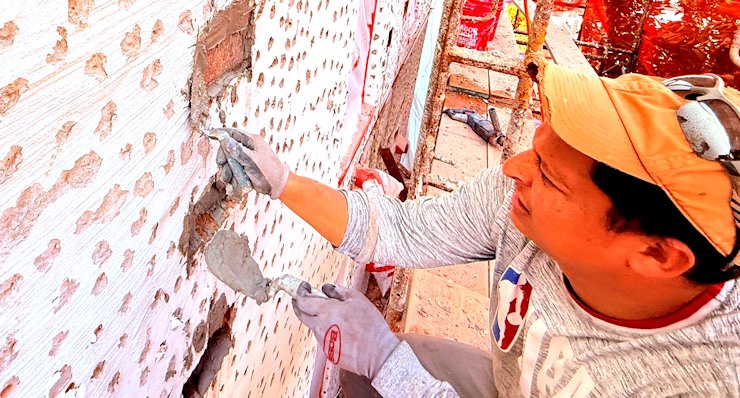
Brick teeth connect the old wall with the patch.
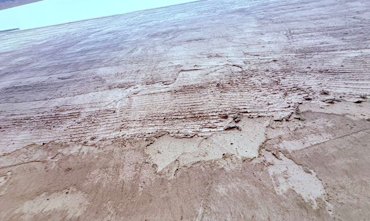
A scratch coat is put on the whole wall with acrylic bonder in the mortar. Acrylic wasn't necessary for the brown coat.
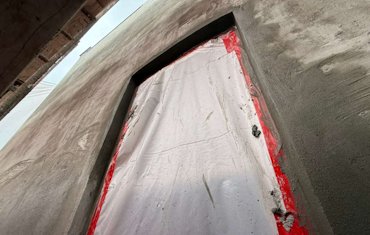
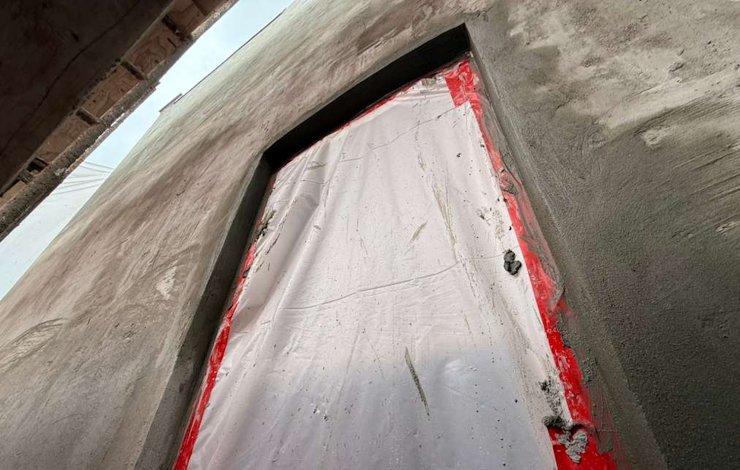
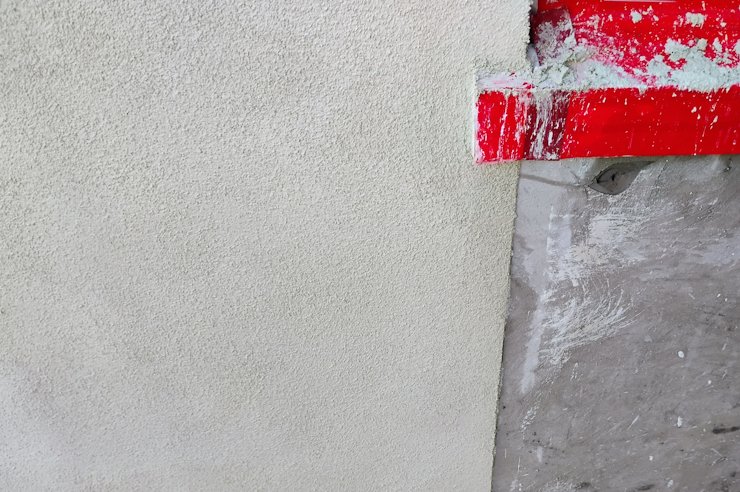
Window returns are filled in and squared up.
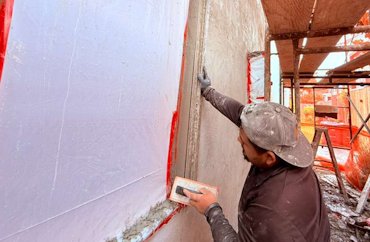
Window returns are trued up by holding a straight edge in one hand and floating with the other hand.
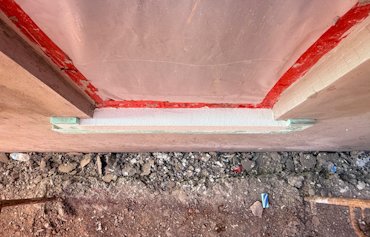
Windows are straight.
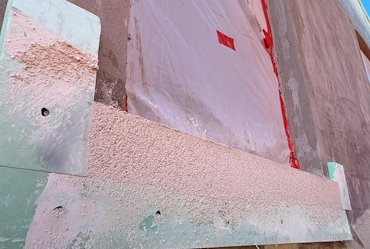
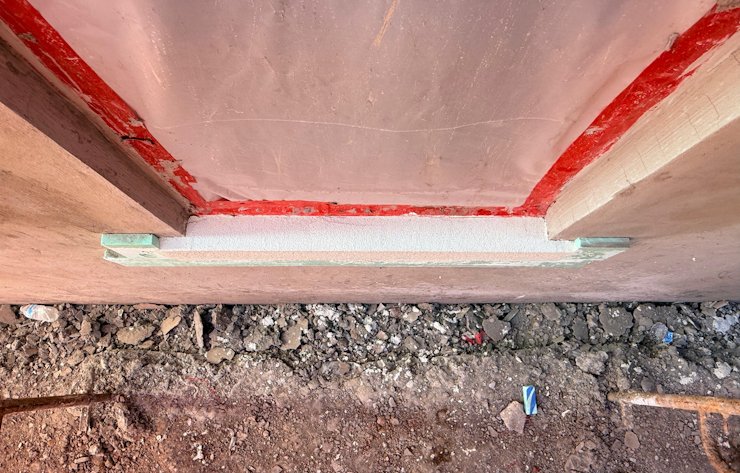
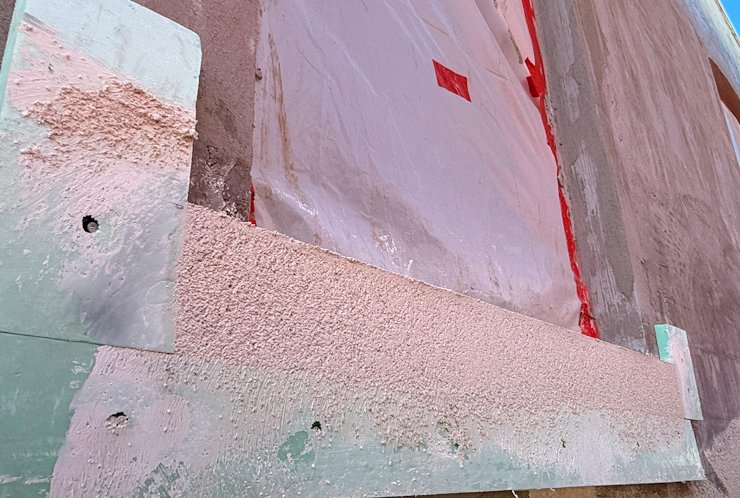
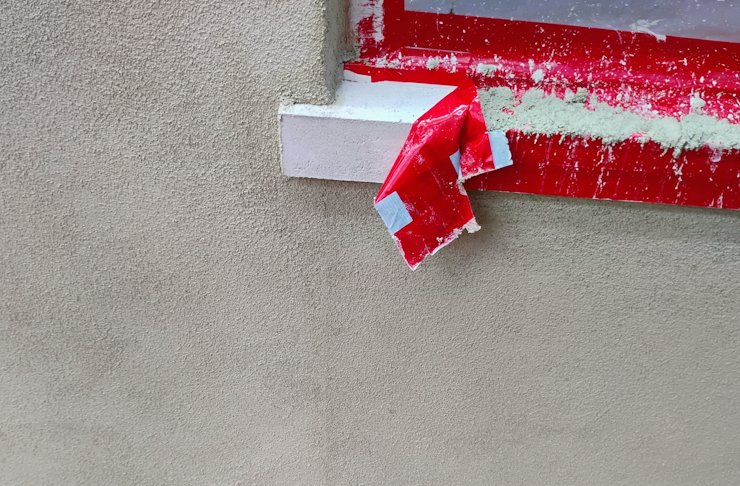
Window sills are formed with styrofoam and filled in. The width of sills on most old houses in Washington is 5 inches. The sills were left white.
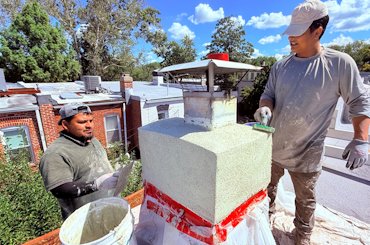
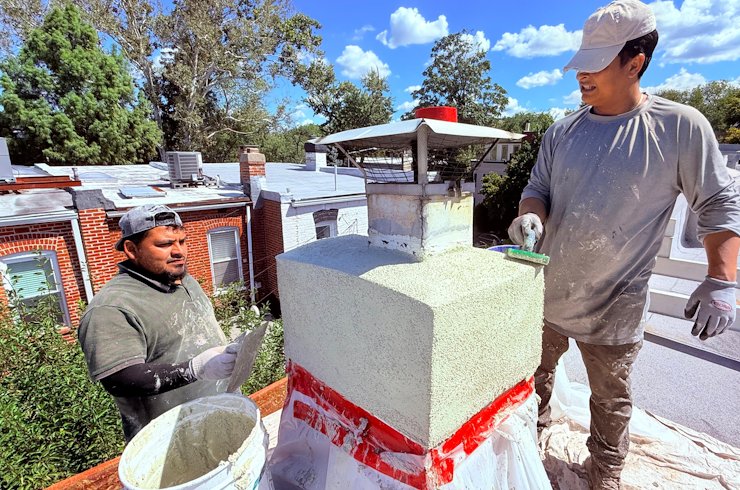
We always redo the chimney cap. The top is rounded off avoid standing water.
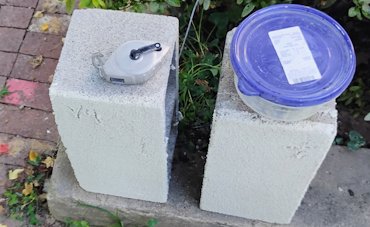
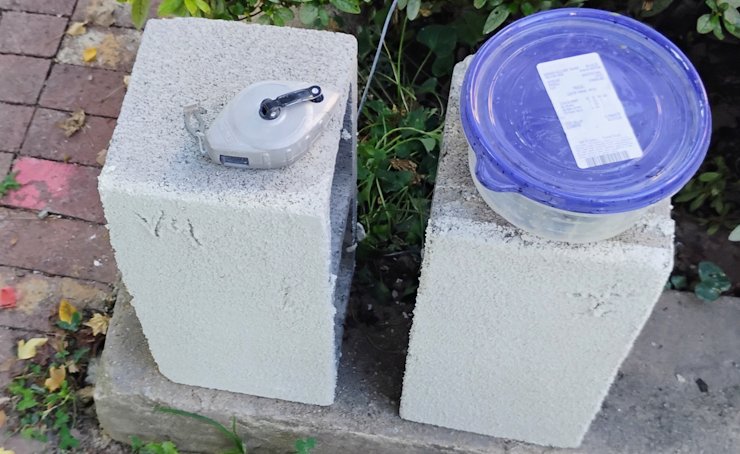
I made sample colors and put them on blocks.
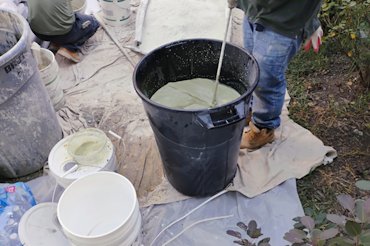
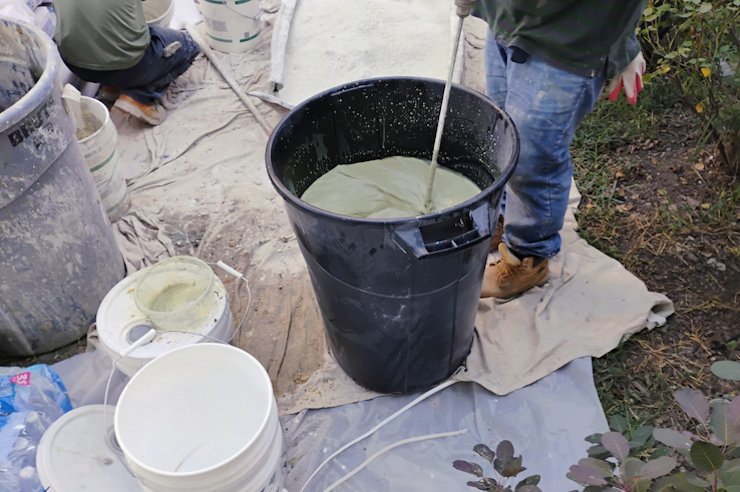
We mixed the color up 20 gallons at a time. Two five gallon buckets of water and 2 five gallon buckets of flexcon.
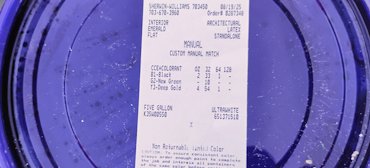
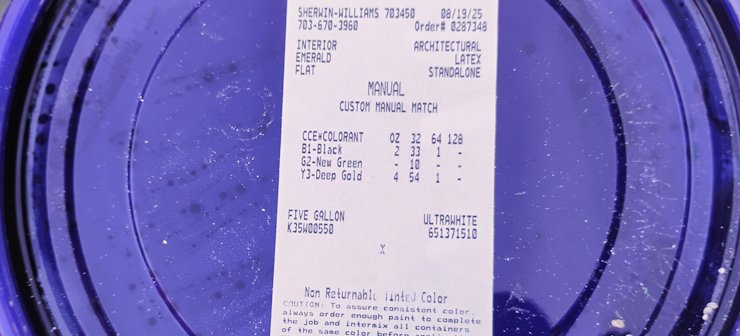
Here's our formula for 20 gallons.
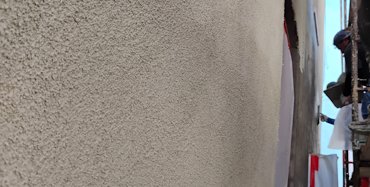
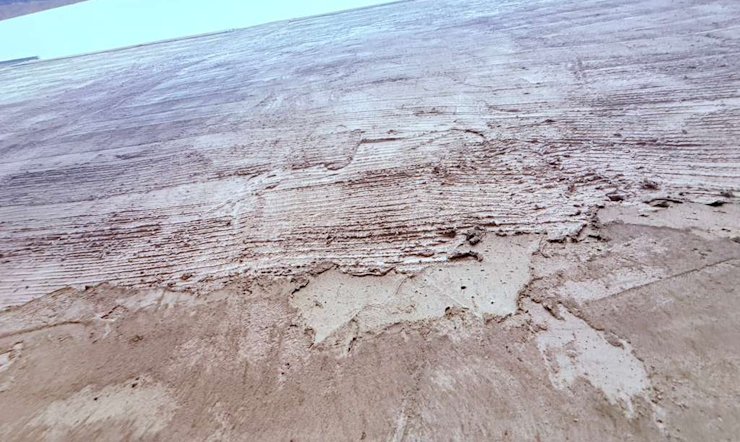
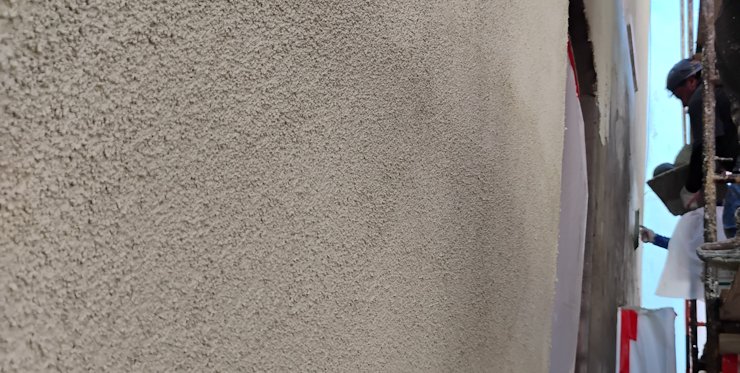
Our finish is a coarse float finish. The finish sand is coarse crushed quartz.
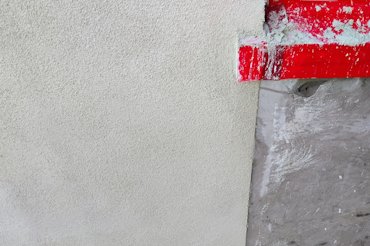
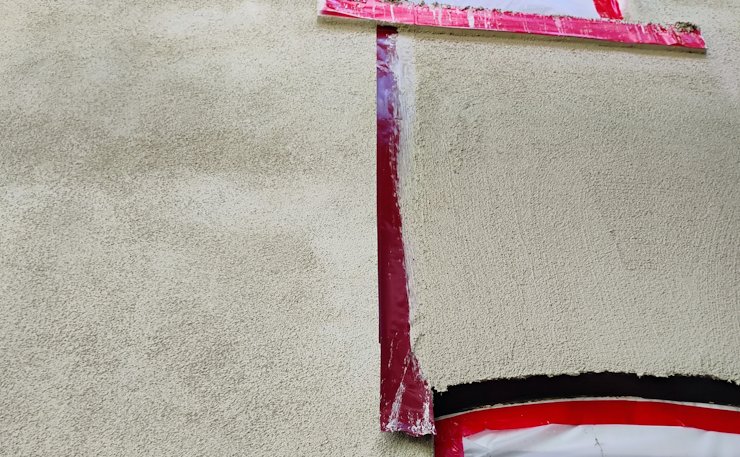
A tape line is used to leave a join if the wall is too big to finish in one smooth operation.
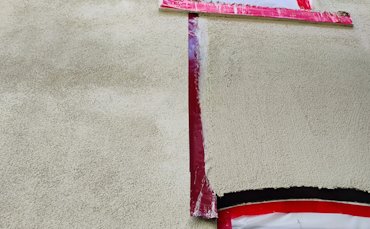
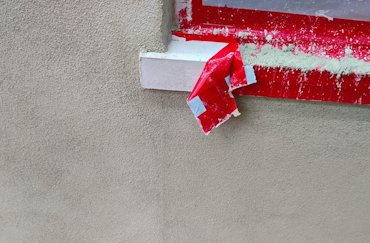
The join under the window is barely noticeable. This sure looks a lot better than some ugly shiny metal
control joint.
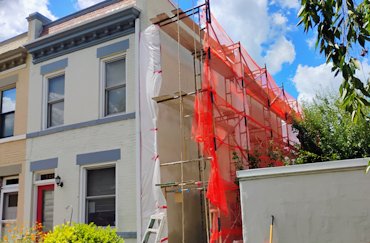
Brand new stucco.