| Home | October 23, 2008 | July 11, 2008 |
->Home->Stucco->Jobs
in Progress->progress101
Jobs
in progress-updated August 29, 2008
Over nine years of jobs in progress, update # 101 !
Greetings from Virginia. If you are new to this page, please
click on the previous update button
at the top or previous progress link at the bottom.
This will take you back, back and back, for over
9 years.
![]() |
![]() |
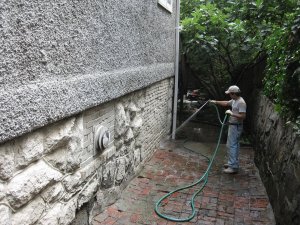
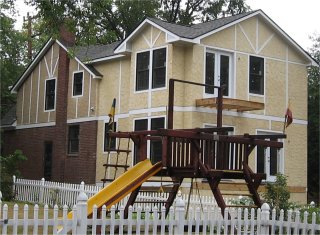
| Old stucco stripped off and restuccoed to
restore
the original historic appearance.
Readers have written me to find out how to get mortar to bond to old soft brick, like the bricks here. Please click here or on the picture for info (opens new window) |
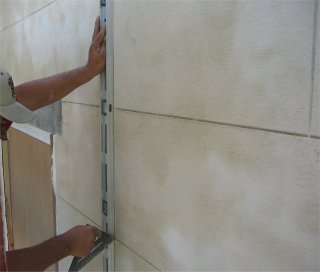
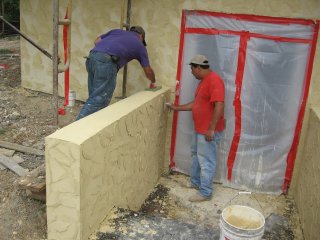
Stucco scored to look like block, as was the
original building.
Check out our method of scoring.
Please click here or on the picture for details. (opens new window) |
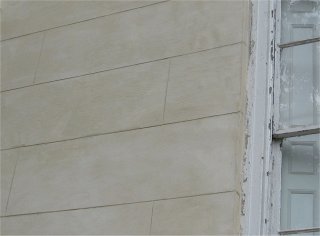
![]() |
Finish coat is white portland cement, lime and
river sand. I found some real river sand in Charlottesville that was just like the original sand which came from the nearby James River. It was real fine and had a high dirt content, just like the sand in the old mortar we stripped off. I am confident the color and texture are authentic. The mottled colors of the real stucco add a random stone color effect. The joints were burnished, or darkened when they were scored. This gives the joints a deeper, richer look. The block finish would even look elegant on new houses. Please click here or on the picture for more (opens new window) |
![]() |
![]() |
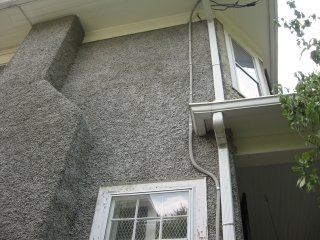
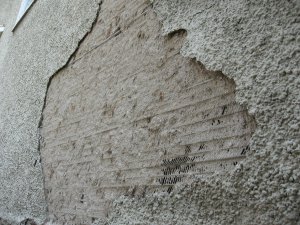
| Isn't it ugly ? Old pebble dash stucco is coming
loose and
falling off wall. Water infiltration cause the old stucco to
deteriorate.
The original stucco was lime and sand, much weaker than the portland
cement
stucco we put back on. This damage was probably caused by a leaking
roof, flashing or whatever. |
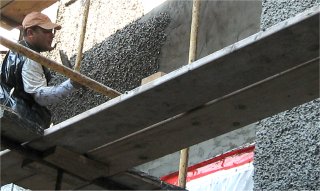
We stripped off two sides of the
house and put
on new tarpaper, lath and stucco. Here, pebble mix is thrown on with a scoop. We were able to match the size of rocks easily. |
![]() |
![]() |
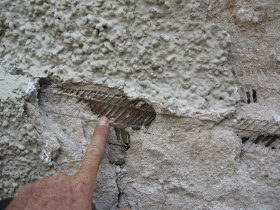
| What, no tarpaper ? Holes in stucco show the original house
had no
vapor barrier,
but there was no rot at all, except below a roof intersection that had no kick out flashing. Apart from that small repair, the sheating was in good shape. |
Decorative band makes the wall look longer.
The back had a wood siding addition. We stuccoed the original house as well as the addition for a seamless appearance. |
![]() |
![]() |
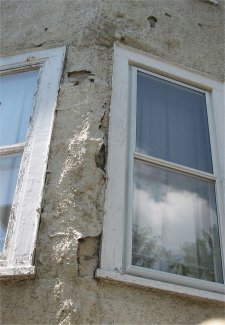
| Old stucco around bay window looks tired.
All the old stucco and lath was easily stripped off. |
We put the cable back on with new straps. House looks like 1925 again. |
![]() |
![]() |
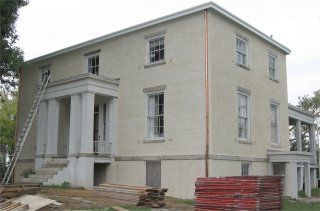
| New stucco gleams like a gem. The original house will be painted to match the addition. You may have seen other jobs we have done for Saxon builders in the past. | Finish coat is white portland, lime, and no. 2
silica sand (crushed quartz). Color is number 12, "chablis", from La Habra Stucco. Texture is applied using random sized blobs. The top of this knee wall is rubbed with a float for a smoother finish. The idea is that water won't collect and stand on the top. BTW, the basement level is cast concrete. The stucco mortar was bonded to the concrete using flex-con |
![]() |
I had to squeeze in another picture, even though this page is
about
220k. If you have dial-up, please be patient.
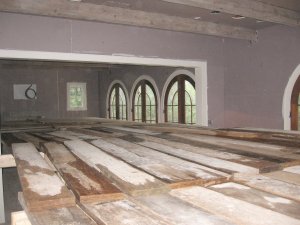
Scaffold set up to plaster inside. Scaffold is made from home-made trestles and covered with planks. Plaster will be colored for a cool venetian style finish. Please check back the next update. |
Home Next update October 23, 2008 previous updateJuly 11, 2008